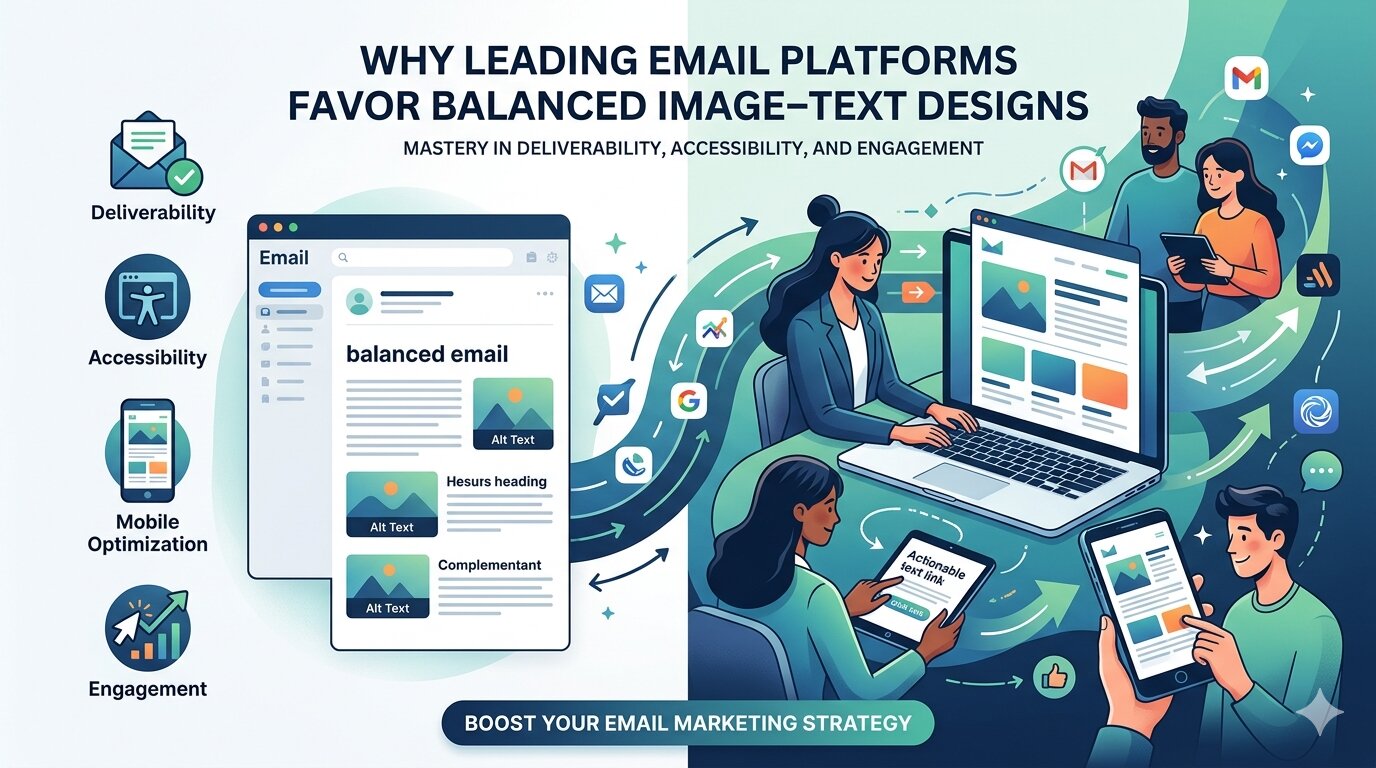
In the world of email marketing, design choices directly impact whether your message reaches the inbox, resonates with readers, and drives action. If you’ve noticed that big names like Klaviyo, Omnisend, and Figma consistently send emails with a balanced mix of text and images—rather than all‑image layouts—you’re seeing a deliberate strategy rooted in deliverability, accessibility, and engagement.
🚀 Deliverability Comes First
Email providers such as Gmail and Outlook are wary of image‑only emails. Historically, spammers used all‑image designs to bypass text‑based filters. As a result, image‑heavy campaigns often get flagged as suspicious. By maintaining a healthy image‑to‑text ratio, brands ensure their emails land in the inbox instead of the spam folder.
🌍 Accessibility Matters
A balanced design isn’t just about avoiding spam filters—it’s about inclusivity. Text elements allow screen readers to interpret content for visually impaired users. They also ensure that if images don’t load (due to slow connections or disabled image settings), the message remains clear. Accessibility isn’t optional anymore; it’s a legal and ethical necessity.
📱 Mobile Optimization
On mobile devices, large image‑only emails can load slowly and break layouts. Text provides flexibility, ensuring content adapts seamlessly across different screen sizes and email clients. A balanced design guarantees that your message looks professional whether it’s opened on a desktop or a smartphone.
🤝 Building Trust
Emails that rely solely on images often feel like advertisements. Balanced layouts, on the other hand, strike a more authentic tone. By combining visuals with clear, actionable text, brands build trust and encourage engagement. This is why even design‑centric platforms like Figma avoid all‑image emails—they know authenticity drives clicks.
📊 Performance Benefits
Studies show that emails with a mix of text and visuals achieve higher click‑through rates than image‑only campaigns. Text provides context, while images capture attention. Together, they create a compelling narrative that guides readers toward the call‑to‑action.
⚠️ Risks of All‑Image Emails
- Higher chance of being flagged as spam
- Poor accessibility for screen readers
- Blank emails if images fail to load
- Slower load times on mobile devices
✅ Best Practices for Balanced Email Design
- Aim for a 40–60% text to image ratio
- Always include alt text for images
- Keep file sizes small for faster load times
- Place critical information (offers, CTAs, dates) in text, not just images
- Use responsive design to ensure adaptability across devices
📧 Pro Tip
Use our Email Builder to preview your image–text balance across Gmail, Outlook, and mobile clients — before you hit send.
Try the free email design checker →
No signup required. Paste your HTML and see how balanced your design really is.
Final Thoughts
The reason industry leaders consistently use balanced image–text designs is simple: they work. They maximize deliverability, improve accessibility, and drive engagement. In email marketing, beauty alone isn’t enough—your design must also be functional, inclusive, and trustworthy. That’s why the smartest brands blend visuals with words to create emails that not only look good but perform brilliantly.